Real estate video production in Iraq, Egypt and the Gulf is shifting from drone flyovers and stock lifestyle clips to films that show what a home feels like from the inside: the light, the materials, the people who will live there. Buyers have watched hundreds of launch videos, and they can now spot a generic one in seconds. The developers winning attention are the ones whose films look like their actual project.
iklipse, a creative and AI production agency working across the GCC, Iraq and Egypt, has made three very different property films in the last year. Each one taught us something about where the category is going.
Iraq is building whole new cities, and the films have to keep up.
Iraq has a serious housing gap. The Ministry of Construction and Housing puts the national shortfall at around 2.3 to 2.4 million units, and the National Housing Policy 2025 to 2030 aims to halve it by 2030. A big part of the plan is new integrated cities delivered with private developers, including Ali Al-Wardi City in Baghdad, which ORA Developers is building.
That shift matters for marketing. When the state handed out land plots, nobody needed a film. When private developers sell finished, serviced communities, buyers start comparing projects the way they compare cars, and the launch film becomes the showroom.
ORA Iraq needed a relaunch film for villas that buyers could trust.
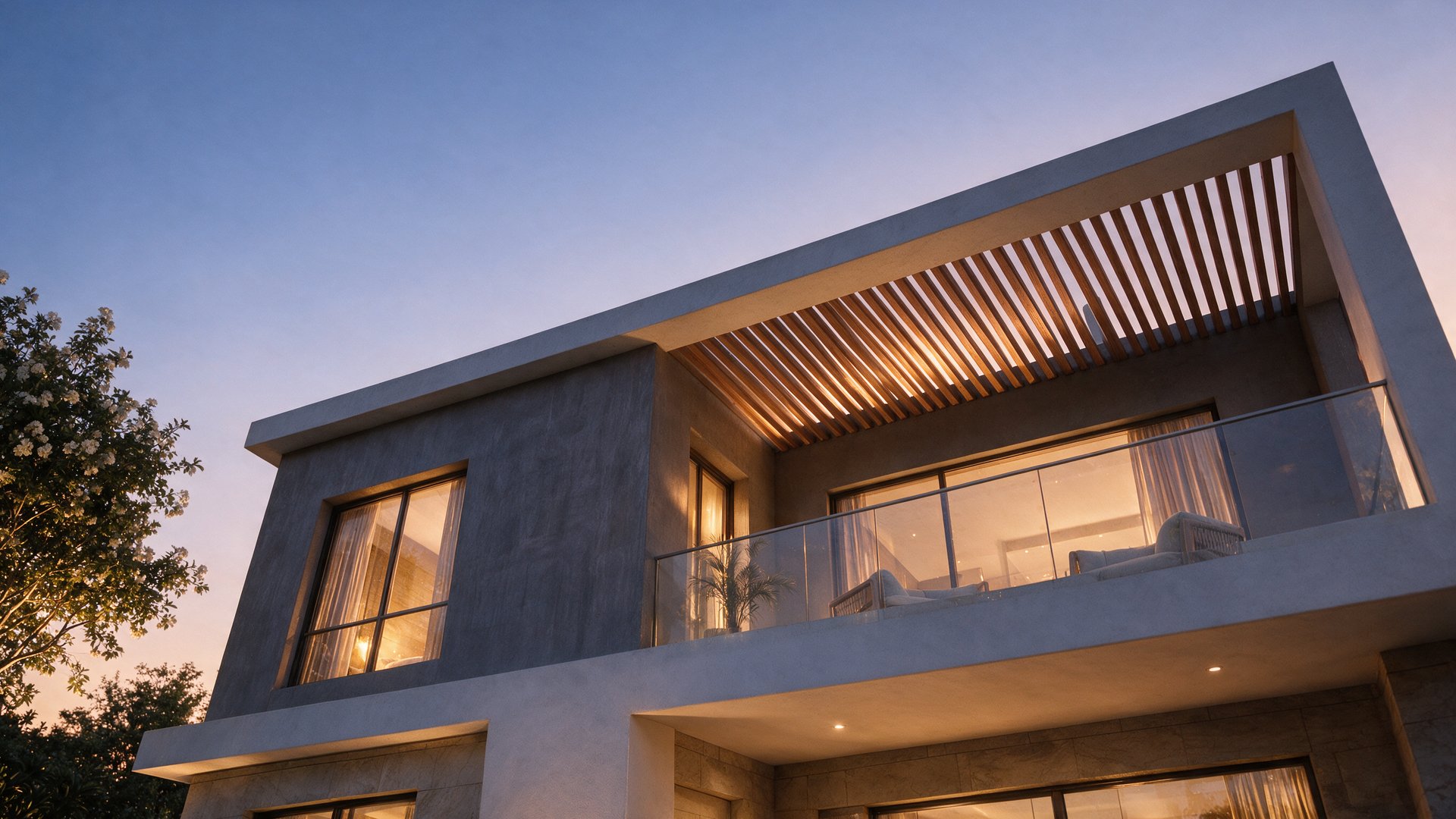
ORA Developers Iraq was relaunching the Al Waha Plus villas at Madinat Al Ward and wanted a film that sells the homes the way a buyer experiences them. We produced the commercial fully with AI, working from the client's scene brief and the development's own renders, so every facade, finish and floor plan stayed true to the real villas.
That last point is the whole game. A property film can look as cinematic as you like, but if the kitchen in the film is not the kitchen in the brochure, you lose the buyer at the site visit. Each scene was built from locked character sheets and a single cinematic grade, moving from sunlit exteriors and still pool water to warm interiors, quiet family moments and a night arrival at the front door. Casting, wardrobe and every human moment were directed for the local audience, so the film feels premium, modest and at home in Iraq. You can see the full project on the ORA Madinat Al Ward case study.
Architecture films can now have the scale of a major shoot without the shoot.
Some projects want a feeling more than a floor plan. Que Gardens by Murtaqa came to us through Lobster Films with a brief for a black and white world of raw concrete, sweeping arches and hard light, built around a single man moving through it. The timeline left no room for a big architectural location shoot.
Lobster Films shot the talent on a blue screen. We built everything around him. Every environment was generated, art directed and composited in-house, from monumental concrete halls to an overhead crowd shot that isolates him in a single pool of light. Lens, perspective and shadow were matched shot by shot so each plate sits naturally inside its world, then the film went through edit, grade and finishing. The Que Gardens case study shows the before and after: an empty studio on one side, a finished frame on the other.
This is where post-production has moved. More and more, the edit suite is where the world itself gets built, as well as where the story is cut.
Egypt's mega projects need films that make a huge plan feel human.
Citystars Park St. is a mixed-use destination in New Cairo by Sky Innovo Developments, valued at over EGP 100 billion and blending commercial, retail, residential and hospitality space into one walkable environment. With VML Egypt, we produced AI-driven visual content to capture the human-centric design of the project for its launch, aimed at investors and future residents. More on the VML Citystars Park St. page.
The challenge with a project that size is that nobody can picture it. A masterplan render tells you where the buildings go. A film has to tell you what a Tuesday evening there feels like.
Here is what buyers notice now.
- Truth to the plan. If the film shows a double height stairwell, the villa had better have one. Building from the developer's own renders keeps you honest.
- Local people in local moments. A family in Baghdad, a couple in New Cairo and an investor in Riyadh all read lifestyle shots through their own culture. Casting and wardrobe that miss this make a premium film feel imported.
- Light and material. Stone, wood, water and evening light sell homes. Generic glossy CGI does the opposite.
- A clear point of view. Que Gardens went black and white. That one decision made it memorable in a feed full of sunsets.
Post-production is where the film is really made now.
All three projects ran through our post-production and video editing team, and two leaned heavily on AI-infused production. The pattern is the same each time: lock the look early, keep one grade across every shot, match lens and shadow carefully, and treat the edit as the place where the story gets decided. AI speeds up the building. Taste still decides what stays in.
For developers, the practical upside is timing. Property launches move fast, renders change late, and a traditional shoot of an unfinished site is often impossible anyway. Building from renders lets the film exist before the building does.
Frequently asked questions
Can you make a real estate film before the project is built?
Yes. For ORA Iraq we worked from the development's own renders and scene brief, so the film matched the real villas even though we never set up a camera on site.
Is an AI property film honest with buyers?
It is when it shows the real design. Our rule is that architecture, finishes and layouts come from the developer's plans. Mood, light and people can be directed, but the product itself stays true.
Do you still shoot live action for property campaigns?
Often, yes. Que Gardens combined a real actor shot by Lobster Films with environments we built and composited. Mixing the two is common.
Which markets do you produce real estate films for?
Recent work covers Iraq, Egypt and the wider GCC. If you have a launch coming, get in touch.
Sources: Zawya, Shafaq News, Iraq Business News, iklipse case studies.