AI video production changed more in 2025 than in any year before it. Google's Veo 3 arrived in May with sound generated alongside the picture, OpenAI released Sora 2 at the end of September, and by the autumn clients were sending briefs that assumed AI from the first line. Budgets and timelines moved with them. What stayed the same is that a person still has to decide what the film is about, what it should feel like, and which of a thousand generated takes is the right one.
The tools learned to talk, move and hold a shot.
At the start of 2025, most AI video was a few seconds of drifting motion with no sound. It was great for mood boards and the odd social loop, and not much else. Faces wobbled, hands misbehaved and nothing stayed consistent from one shot to the next.
Then the year sped up. Google introduced Veo 3 at its I/O conference in May 2025, and its headline trick was native audio: dialogue, ambience and sound effects generated with the picture. Veo 3.1 followed in October. OpenAI released Sora 2 on 30 September as a standalone iOS app and inside ChatGPT, and it climbed to the top of the US App Store within days. Alongside the big names, tools such as Runway and Kling kept shipping updates through the year, and image models got much better at keeping a product, a face or a set consistent between frames.
The practical result for production teams was simple. Shots that were impossible in January were usable by December, as long as someone with a good eye was choosing and finishing them.
The creative brief changed shape with the tools.
Briefs we saw at iklipse in 2025 started to look different. A year ago, a brand would ask for "a hero film and some cutdowns". By the end of 2025 they were asking for a library: dozens of product visuals, several aspect ratios, versions for different markets, and new material every month. AI video production made that volume affordable for brands that could never have paid for weekly shoots.
Timelines got shorter, and approvals became the bottleneck.
Generating a shot can take minutes. Agreeing which shot is right still takes a meeting. The teams that moved fastest in 2025 were the ones that changed how they review work: clear references up front, fewer decision makers, and quick daily rounds of feedback in place of a big reveal at the end.
Budgets moved from the shoot day to the edit suite.
Money that used to go on location, crew and travel is moving to art direction, generation time, compositing, colour and sound. The finishing work matters more now, because raw AI output almost always needs cleaning before it looks like a real commercial. Our post-production team spends a lot of its week on exactly that.
Here is where human direction still decides the result.
Joe G. heads AI production at iklipse, and his team starts every AI project the way a traditional director would: with references, a shot list and a clear idea of the light. The models are fast, but they have no taste of their own. Someone has to know that a shake should look cold and fresh, that a pour should overflow just enough, and that a lifestyle scene needs real-looking hands.
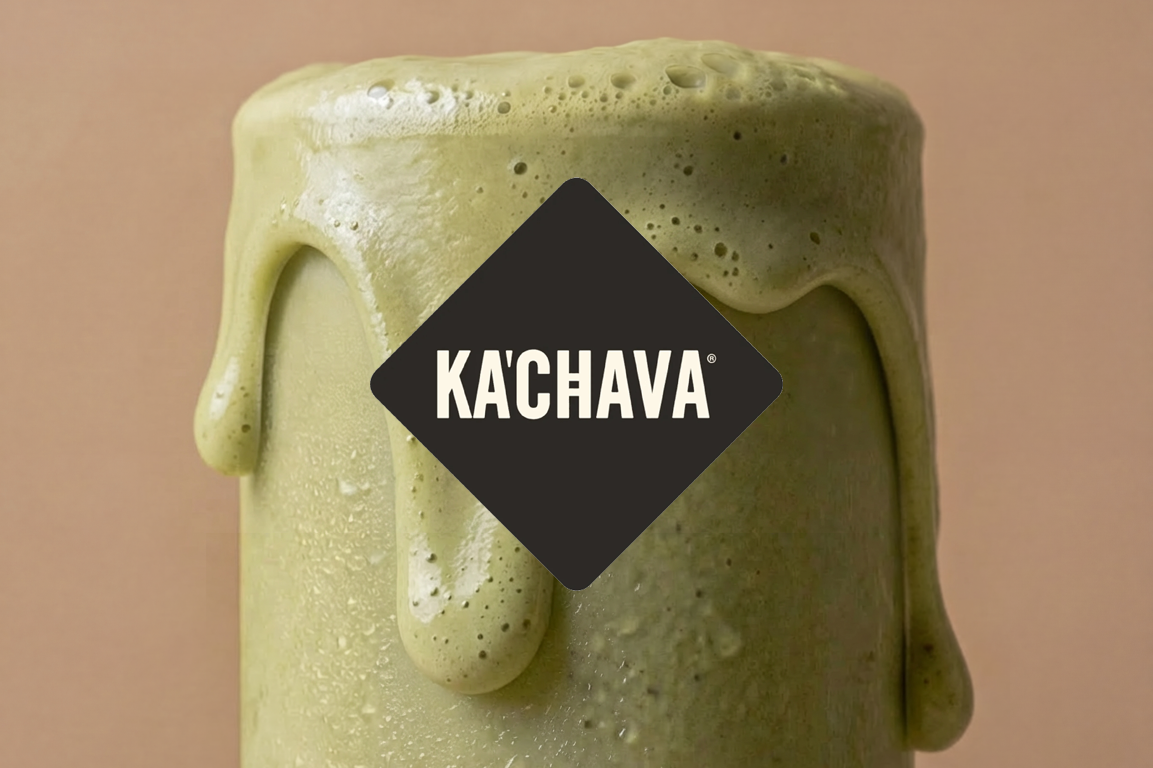
Our Ka'Chava work is a good example. We produced a full set of AI product visuals for the superfood shake's core flavours: macro texture shots of shakes in motion, clean studio still lifes and golden-hour scenes on city rooftops. Every frame was generated and art directed in-house to feel shot on set, and the whole library was delivered without a single day of physical production. See it at our Ka'Chava case study.
For Sleeke, a hair care and styling tools brand based in North Hollywood, we ran a focused AI campaign for its straightening and styling tools. The job was to make performance and technology visible, quickly, across online channels. That meant someone deciding what "sleek" looks like on screen before a single frame was generated. The work is at our Sleeke case study.
Audiences noticed when AI was used carelessly.
2025 also showed the limits. Coca-Cola's AI-made holiday films in late 2024 drew a wave of criticism, with viewers calling them soulless and pointing at the uncanny figures. The lesson the industry took into 2025 was clear enough: people will happily watch AI imagery, and they get annoyed when it looks cheap or when it feels like craft was cut to save money.
That is why we treat AI as a production method with the same quality bar as a camera. If a shot would not pass on a real set, it does not pass in a generated one either.
Here is what we expect AI video production to look like in 2026.
- More briefs written for AI from day one. Clients will plan whole content libraries and expect to refresh them often.
- Hybrid shoots as the default. A small live-action shoot for faces and hands, with AI building the worlds, products and variations around it.
- Closer scrutiny of what is real. Platforms and regulators are moving towards labelling, and brands will need a clear view on when to disclose AI.
- Directors who can do both. The most useful people on a project will understand lenses and light as well as prompts and models.
iklipse is a creative and AI production agency working across the US, the GCC and Egypt. If you are planning your 2026 content and want to see what AI-Infused Production could do for your brand, talk to us.
Frequently asked questions.
What were the biggest AI video tools of 2025?
Google's Veo 3 (May 2025, with native audio) and Veo 3.1 (October), OpenAI's Sora 2 (30 September 2025), plus steady updates from tools such as Runway and Kling.
Is AI video production cheaper than a traditional shoot?
Often, for product visuals and content libraries, because it removes location, crew and travel costs. Spend moves to art direction and finishing, and quality still depends on the team.
Can AI video replace a director?
No. The models generate options; a director decides the idea, the look and which take is right. That judgment is still where most of the value sits.
Sources: Google (I/O 2025), OpenAI, Adweek, CNN, Tech Insider.