An AI product photography shoot in the US in 2026 usually costs a fraction of a traditional studio shoot once you count crew, studio, props and reshoots, and it delivers faster. A traditional shoot still makes sense when you need real people, real texture you can touch, or footage for regulated claims. The honest answer depends on how many images you need, how often you need new ones, and how much the product itself has to be photographed for real.
We are iklipse, a creative and AI production agency working with brands in the US, the GCC and Egypt. We run both kinds of production, so here is a plain numbers comparison, with the caveat up front: rates vary a lot by city, studio and brief.
A traditional product shoot has more line items than most brands expect.
Public pricing guides give a wide range. Shopify's guide to product photography puts US product photographers at roughly $500 to $3,000 a day, and per image prices at around $50 to $350 depending on complexity. Studio specialists such as Squareshot publish lower per image rates for simple ecommerce work, often in the $40 to $60 range for a mid tier studio. Studio rental on platforms like Peerspace is commonly quoted at roughly $55 to $150 an hour.
Those numbers are only the start. A styled shoot for a premium brand often adds:
- A food or prop stylist, plus the props themselves.
- Models, with usage fees that rise with the length and reach of the campaign.
- Location fees and permits for lifestyle scenes.
- Shipping samples, sometimes more than once if a flavour or colour is wrong.
- Retouching, which can be priced per image on top of the shoot.
- Rush fees when a launch date moves.
Then there are reshoots. If the season changes, the packaging updates or the performance team asks for a new angle, much of that cost comes back.
An AI shoot moves the cost from the set to the art direction.
An AI-infused shoot still needs real inputs. We start with accurate photography or 3D references of the actual product, the real packaging and the brand's colour values. From there, the work is art direction, generation, compositing and retouching, done by people who know how a real lens and real light behave.
Joe G., our head of AI production, runs that part of the process. His team builds each scene from a written brief and a mood board, the same documents a photographer would get, and then generates, selects and refines until every frame matches the product exactly. The main costs are skilled hours and tool subscriptions. There is no studio rental, no shipping, no crew catering and no weather.
Where the savings actually come from.
- No physical production days. Studio, crew, travel and location costs drop out.
- Cheap variations. A new background, season or market version is an edit, which means a new shoot is no longer needed.
- Fast turnaround. Turnaround is measured in days, because there is no booking calendar to wait on.
- Reshoots become revisions. Changing an angle or a prop happens at the desk.
Here is how two real projects compare.
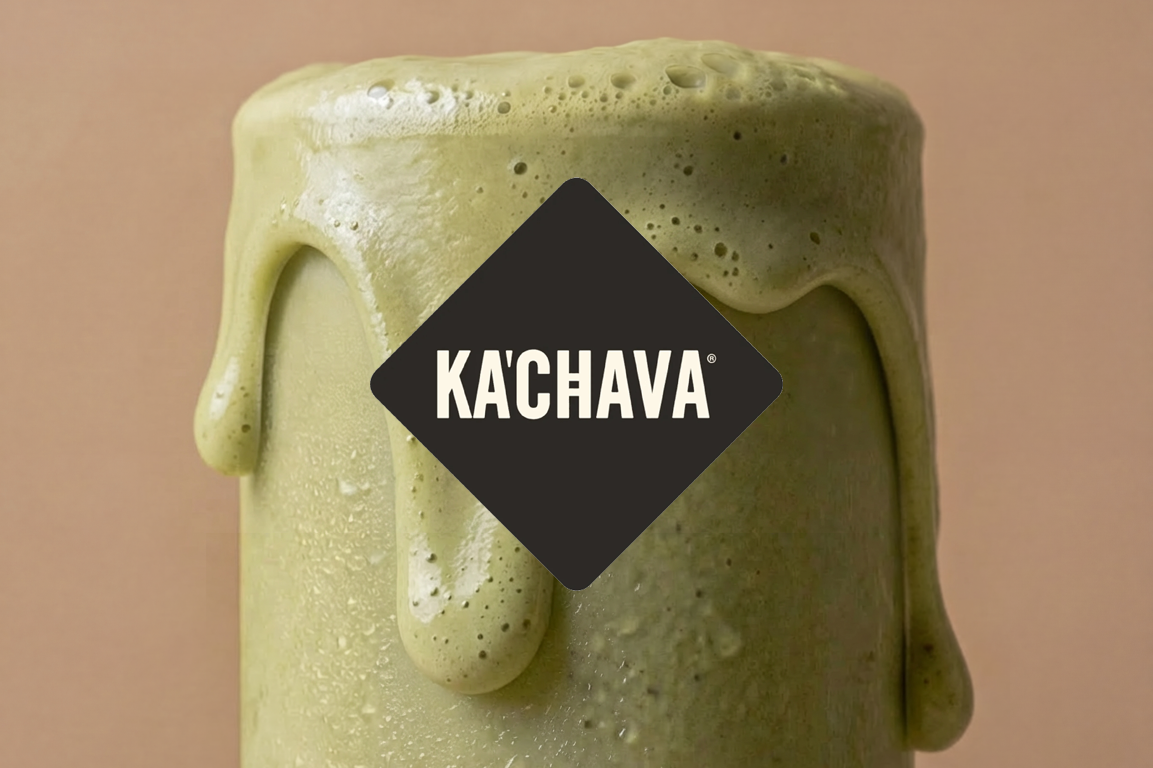
Ka'Chava needed a steady stream of appetising visuals.
Ka'Chava is a plant based superfood brand built around whole food nutrition in a single shake. Its colourful flavour line needs visuals that hold their own on product pages, ads and busy social feeds. For our Ka'Chava work, we produced a full set of AI product visuals for the core flavours: macro texture shots of shakes in motion, clean studio still lifes, overflowing pours and golden hour scenes on city rooftops. Every frame was generated and art directed in-house to feel shot on set, and the content library was delivered without a single day of physical production.
Think about what that list would mean on a real set. Liquid pours are famously fiddly, with many takes and a lot of cleaning between them. A rooftop at golden hour gives you one short window a day. A traditional version of the same library would mean a studio day, a location day, a food stylist, props and models.
Sleeke needed premium visuals for styling tools.
Sleeke is a hair care and hair tool brand based in North Hollywood, California, known for high technology styling tools and clean hair care. We ran a focused AI production campaign for its ironing and styling products, building a narrative around performance and technology. Generative AI made a fast rollout of high end digital assets possible, highlighting key features and supporting the brand's premium positioning online.
Here is a rough side by side for a 20 image set.
These are illustrative ranges built from the public rates above. Every brief is different, so treat them as a starting point for a conversation.
- Traditional, simple ecommerce cut-outs: often a few thousand dollars at published per image rates, plus samples and shipping.
- Traditional, styled lifestyle set: photographer day rates, stylist, props, studio or location, models and retouching can push a two day shoot well into five figures.
- AI-infused set: priced on art direction and production hours, usually landing well below the styled traditional shoot, with extra variations costing far less.
Traditional photography still wins in some situations.
We still recommend a real shoot when the brief depends on real people using the product, when the image will support a claim about results, or when you need video of a physical demonstration. Showing what a product actually does should be photographed for real. AI is a strong tool for making a product look its best. It should never be used to fake what the product achieves.
Many of our clients mix both: a real shoot for hero product references and any claims, then an AI-infused production pipeline for the scenes, seasons and endless variations a content calendar demands. Our post-production team keeps both looking like one campaign.
Frequently asked questions about AI product photography.
Is AI product photography cheaper than a traditional shoot?
For styled and lifestyle imagery, usually yes, because studio, crew, location and reshoot costs fall away. For simple white background cut-outs, the gap is smaller.
Does the product need to be photographed at all?
Yes. Accurate references of the real product and packaging keep the final images honest and on brand.
How fast is an AI product shoot?
Turnaround is typically a matter of days, depending on the number of images and rounds of feedback.
Can AI images be used on Amazon or in ads?
Yes, as long as they show the product accurately and follow each platform's rules on AI labels and product representation.
Sources: Shopify, Squareshot, Peerspace (via Jobbers).