In 2025, the hottest copywriter in the room isn't even human. Generative artificial intelligence has gone from buzzword to baseline. According to a SurveyMonkey-referenced report, 61% of marketers are using AI in at least one channel and 56% say their company is actively implementing AI. More than half of marketing teams use AI tools to optimize email and SEO content, and half are creating content directly with AI. Meanwhile, 43% automate repetitive tasks and 41% analyze data for insights. AI has moved past novelty and into everyday utility.
The numbers get even more staggering when you look at investment forecasts. The AI in marketing market is expected to grow at a compound annual growth rate of 26.7% and reach $217.3 billion by 2034. McKinsey's latest report (as cited by Digital Marketing Institute) finds 92% of businesses plan to invest in generative AI tools within the next three years. High stakes? Absolutely. High anxiety? Also yes. Only 1% of organizations that have adopted generative AI believe their investments have reached maturity. Marketers are clearly trying to ride the AI wave, but many are still clinging to the life raft.
That tension shows up in survey data. 31% of marketers worry about the accuracy or quality of AI tools and 39% avoid generative AI because they're unsure how to use it safely. In other words, half of your colleagues are automating A/B tests while the other half wonders whether an algorithm will hallucinate a profanity in their next newsletter. The fear isn't unfounded. Only 1% of businesses say their generative-AI investments have matured, and the technology's occasional propensity for "AI slop" has become a meme in its own right.
Yet there's evidence that AI delivers a tangible payoff. Forbes notes that for every dollar brands put into influencer marketing they get $5.78 back on average, yet 30% of brands still don't measure their influencer ROI. When AI helps you target the right micro-creators, that ROI could be even higher. In the creator economy, customers are willing to pay up to 16% more for a better experience; AI-driven personalization can make those experiences scalable.
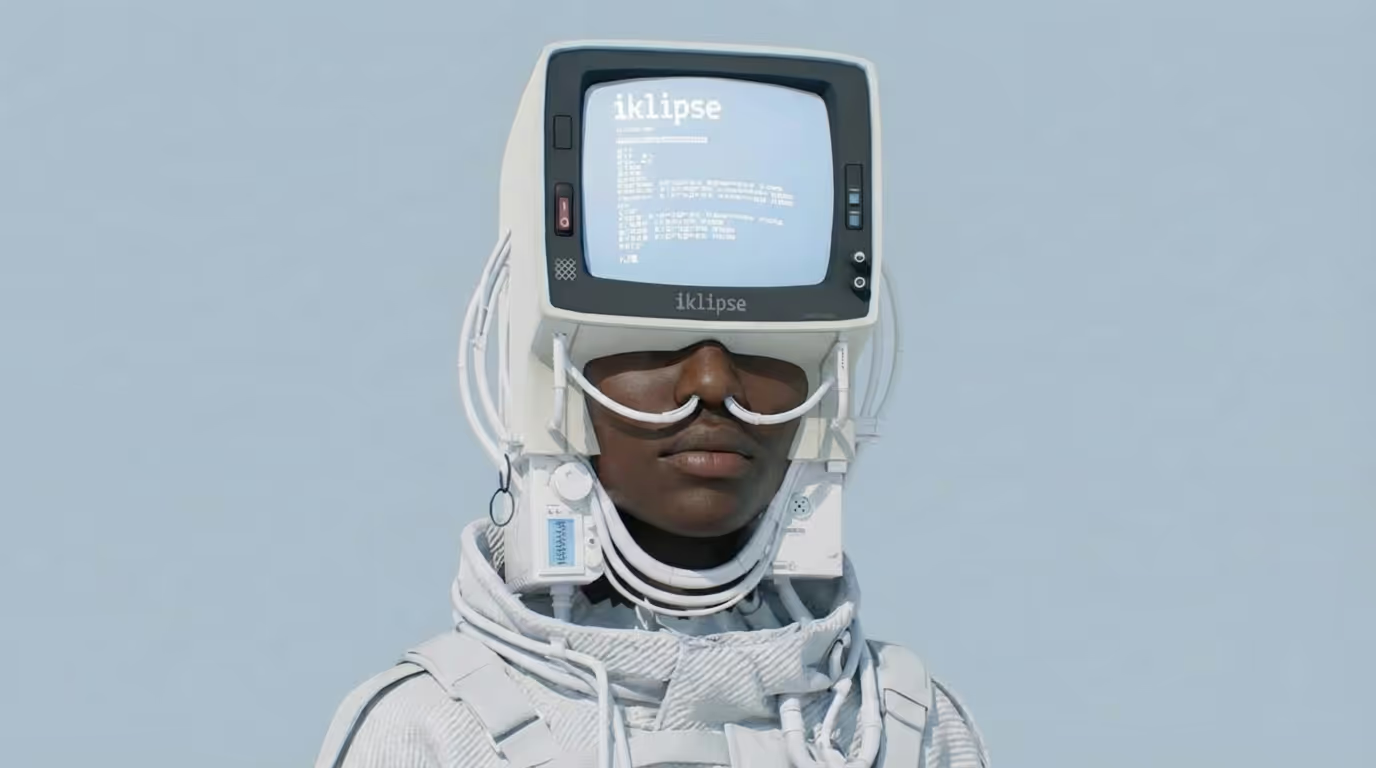
This is where agencies like iklipse come in. By combining human creative direction with AI-powered execution, teams can deliver premium branding, content, and campaigns at a pace and price point that traditional agencies struggle to match. The sweet spot isn't choosing between humans and machines; it's knowing when to deploy each.
What does all this mean for marketers? First, AI doesn't excuse you from having taste. Tools like ChatGPT and Midjourney can churn out a thousand headlines in seconds, but they can't always tell when a pun is too cringeworthy. Use AI to scale brainstorming, automate repetitive tasks and extract insights, then let human judgment decide which idea is actually funny or intentionally polarizing. Second, remember that personalization isn't just a buzzword. Seventy-three percent of marketers say AI is key to delivering personalized customer experiences. If your emails still start with "Dear valued customer," the bots are laughing at you.
Finally, pay attention to the culture inside your own organization. A lack of training is holding back adoption: 70% of marketing professionals report that their employer doesn't provide AI training. Investing in AI without investing in people is like buying a Ferrari and refusing to learn to drive. The marketers who will dominate the next decade are those who treat AI as a creative partner, not a magic wand. They'll also know when to ignore the machine, roll up their sleeves, and write a headline that actually makes another human smile.