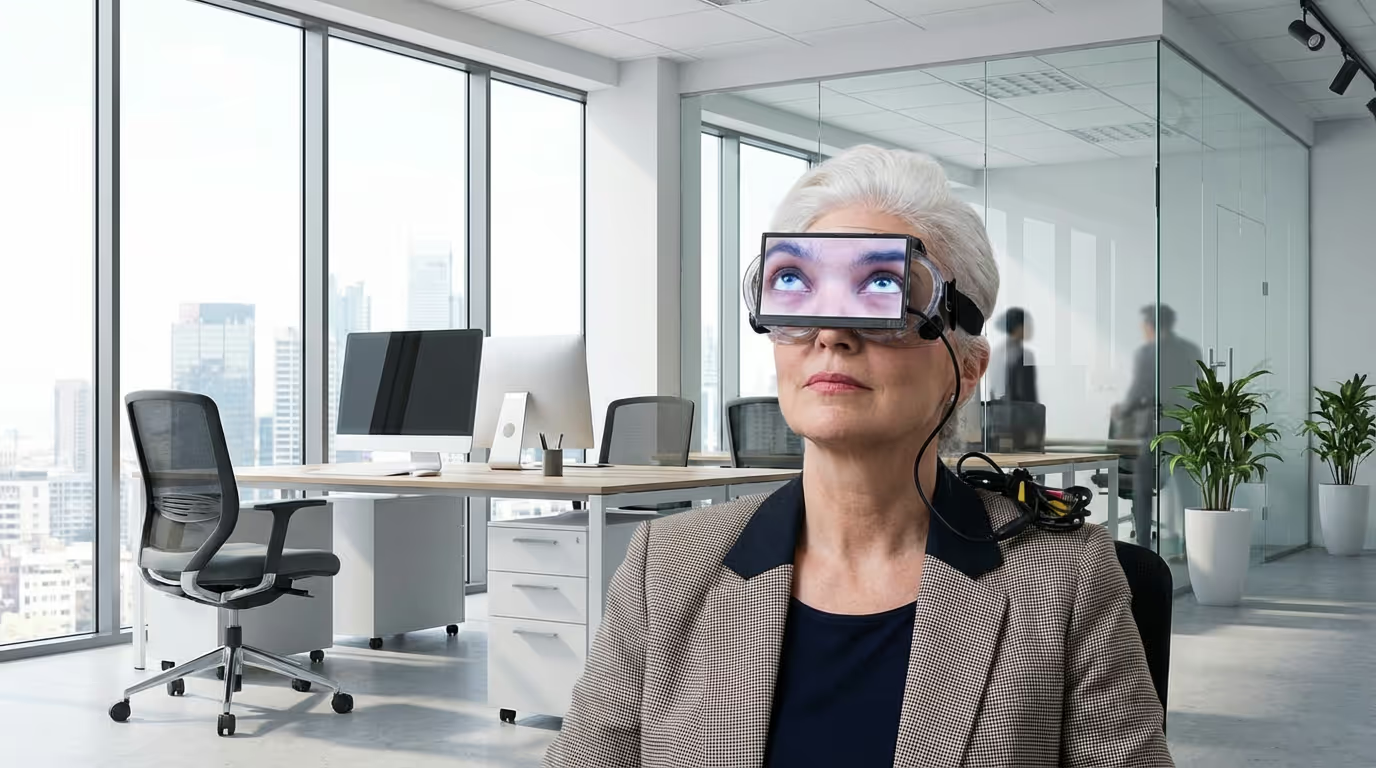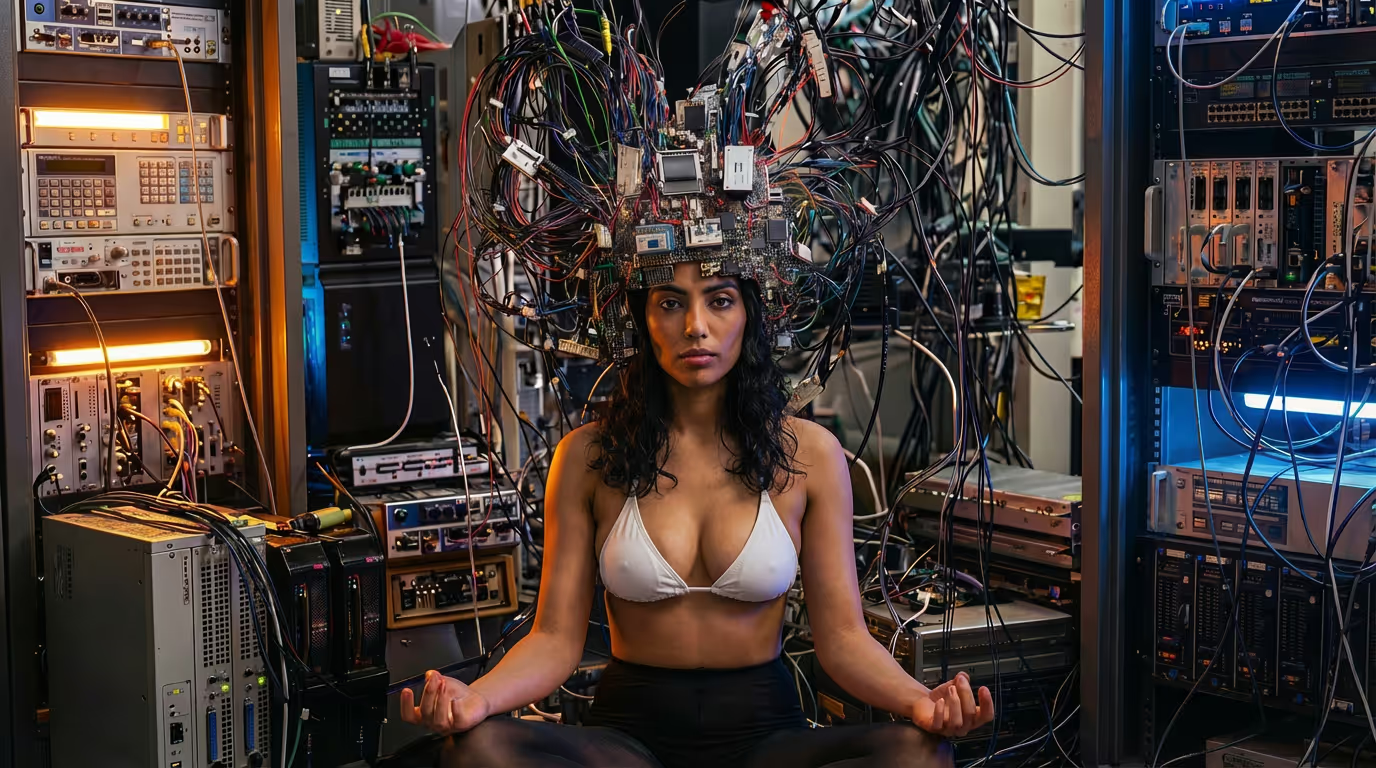
We're living through a time when 62% of Americans believe AI will increase productivity and 53% think it will lead to economic growth, yet 61% fear it will destroy more jobs than it creates and nearly half worry it will destroy more businesses than it creates. MIT Sloan dean Richard Locke calls this a pivotal moment: we can choose to deploy AI to empower the workforce and make the most of human capabilities or we can use it to eliminate millions of jobs. The cultural bridge we build now will determine which future we inhabit.
Scholars from Wharton University advocate for hybrid intelligence: a form of collaboration where AI's speed and analytical rigor are fused with the depth of human insight. This isn't just about efficiency. It's a recognition that natural intelligence spans aspirations, emotions, thoughts and sensations and that ignoring these layers leads to shallow and potentially harmful implementations. Implementing hybrid intelligence is not simply a technology upgrade but a cultural transformation. It requires "double literacy": understanding both human cognition and how AI systems work so that we can interpret data through the lens of values and context.
This cultural pivot has concrete business implications. The World Economic Forum's 2025 Job Report (cited in the Wharton article) identifies critical thinking and creativity as top requirements for success in an AI-infused marketplace. In other words, the skills our kindergarten teachers tried to instill (think outside the box, share your crayons, don't eat glue) are back in fashion. Meanwhile, MIT researchers remind us that the direction of AI development is a choice: we can build machines that simply replace what humans already do or design "bicycles for the mind" that extend human capacity. The latter path requires acknowledging the five capabilities where humans shine (empathy, presence, opinion, creativity and hope) and ensuring that AI complements rather than erodes them.
In practice, this is the philosophy behind agencies like iklipse: AI handles the speed and scale while human creative directors ensure every frame serves the story. That balance is what transforms raw efficiency into work that actually resonates.
Culture is messy; humor often helps us navigate it. There's something inherently funny about training a neural network to recognize sarcasm when humans themselves struggle to detect it in text messages. It's even funnier when people yell at a voice assistant because it doesn't understand their accent, only to realize that their frustration says more about their relationship with technology than it does about the algorithm. These moments reveal the cultural negotiation at play. We want AI to be "human-like," yet we demand that it never exhibit our own flaws. We treat it as an oracle but curse it when it gets creative.
Building a healthy cultural bridge means embracing the contradictions. It means designing systems that are transparent, respectful of privacy and aligned with societal goals. It means recognizing that double literacy isn't optional; we need leaders and employees who understand both cognitive psychology and algorithmic behavior. It means acknowledging that some people will romanticize a pre-AI world while others will over-hype the technology's potential. Polarization is inevitable, but it can be constructive if it forces us to articulate our values.
The hybrid future is neither utopia nor dystopia; it's an ongoing negotiation. Our task is to make sure that the cultural bridge we're building doesn't collapse under the weight of unrealistic expectations. If we succeed, we'll live in a world where AI systems amplify our humanity rather than flatten it, where creativity and critical thinking are rewarded and where jokes about robots taking your job are replaced by stories of machines making your work more meaningful.